

When Loyalty Start
Asking Better Questions
Asking Better Questions
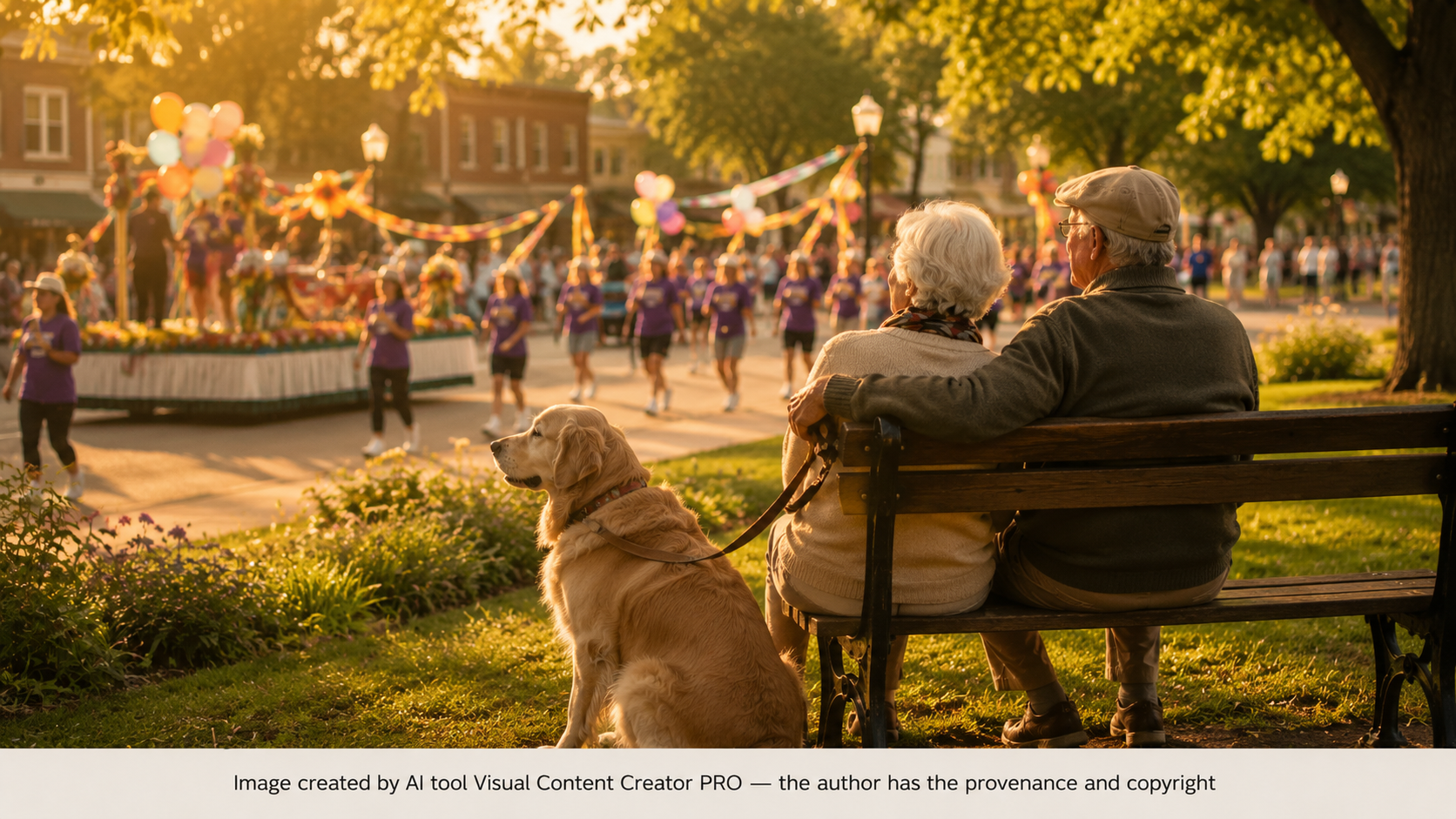
By August, the flags have mostly been folded away.
Canada Day and the Fourth of July have passed. The parades are over, the picnic tables cleared, and the last bits of fireworks have faded from the summer sky.
For many, those July celebrations stirred pride. For others, they may have brought more complicated feelings. Some may have longed for what was. Some may have lamented what is. Some may have quietly, or not so quietly, yearned for what could still be.
That is the curious thing about patriotism. It can look simple from the outside, but the heart keeps receipts. It carries memory, gratitude, disappointment, betrayal, belonging, and hope. Sometimes all before lunch.
Looking back on those July celebrations got me thinking about loyalty.
We are loyal to nations, family roots, friends, neighbours, causes, traditions, and the local businesses and professionals who have served us well over the years.
We may stay with the same doctor, hairdresser, bank, advisor, accountant, mechanic, or favourite café because they have earned our trust. Or because changing feels like too much bother. Or because, somewhere along the way, the familiar became comfortable, the comfortable became automatic, and the automatic was quietly renamed loyalty.
As we age, loyalty can become more layered. At some point, many of us begin asking different questions.
Who has shown up for me? Where do I still feel respected? What deserves my continued trust? What am I holding onto because it is meaningful, and what am I holding onto because it is simply known?
Research gives us a useful lens. According to psychologist Dr. Laura Carstensen, socioemotional selectivity theory suggests that as people become more aware that time is finite, they often become more selective about where they invest emotional energy. Relationships that feel meaningful may become more valued. Social circles may become smaller, but chosen more carefully. [1]
We may stop confusing endurance with loyalty. We may stop calling something commitment when it has quietly become obligation, habit, guilt, or fear of change.
Loyalty can be beautiful. It can keep families connected through hard seasons, hold communities together after loss, and give us a sense of identity and belonging.
But loyalty also asks for wisdom.
A 2021 meta-analysis on age and moral foundations found that loyalty and betrayal are part of how people reason morally, but age alone did not explain these patterns. Values, beliefs, and context matter too. [2]
By midlife and beyond, most of us have had some practice with loyalty. We have been loyal to people who deserved it, as well as some who did not. We have learned that loyalty without respect can become self-abandonment. Loyalty without truth can become pretending. Loyalty without boundaries can become a very polite form of exhaustion.
And then there is loyalty in the marketplace.
Maturing clients and customers are often described as brand loyal, but that phrase deserves a second look. Are they loyal because a business has earned trust through fairness, consistency, patience, and respectful service? Or are they staying because change feels inconvenient, annoying, risky, or confusing?
There is a difference. Earned loyalty feels like trust. Unexamined loyalty can feel like being stuck.
Research on older adult consumers found that perceived ethical behaviour had a positive and significant relationship with brand loyalty. Simply put, when older consumers believed a brand behaved ethically, they were more likely to stay committed to that brand. [3]
Loyalty from the age 50+ market should never be taken for granted. It is not a prize for being nearby. It is not owed because they have always come here. It is earned and re-earned, and easily lost in a single careless moment.
A rushed conversation. A dismissive tone. A confusing form. A feeling of being invisible.
On the other hand, loyalty can be strengthened in simple, powerful ways. Listen without hurrying. Explain without patronizing. Follow through. Respect history and knowledge. Make it easier to stay.
Perhaps loyalty in later life is not about clinging to the past. Perhaps it is about seeing more clearly what still deserves our faith, our time, our money, our voice, and our heart.
That is not cynicism. That is discernment.
And maybe, after enough years of loving people, places, causes, communities, businesses, and ideas, we earn the right to ask better questions.
Not, am I loyal? But, is this loyalty still life-giving? Not, have I stayed? But, does this still honour who I am now? Not, what did I once promise? But, what deserves my trust today?
Warmly,
Rhonda Latreille, MBA, CPCA®
Founder & CEO, Age-Friendly Business®
p.s. Since 2003, Age-Friendly Business® has trained thousands of professionals and businesses committed to learning how to elevate the quality of the client, customer, and community experience. They are called Certified Professional Consultants on Aging (CPCAs)® and Age-Friendly Businesses®. They have earned the right to ask for your business.
Sources
[1] Socioemotional selectivity theory overview: https://www.sciencedirect.com/topics/psychology/socioemotional-selectivity-theory
[2] Age and Moral Foundations, Cambridge Core: https://www.cambridge.org/core/journals/spanish-journal-of-psychology/article/abs/age-and-moral-foundations-a-metaanalytic-approach/5741CBF3470C40FE00307241E36B49C5
[3] How Older Consumers’ Perceived Ethicality Influences Brand Loyalty: https://journals.sagepub.com/doi/10.1177/2158244018778105
Body – Loyalty and Our Health
Loyalty affects our well-being because it shapes where we place our trust, time, energy, and attention.
When loyalty connects us to safe, respectful relationships, it can reduce loneliness and strengthen belonging. The U.S. Surgeon General’s 2023 advisory on social connection reported that poor or insufficient connection is associated with higher risk of premature death, heart disease, stroke, anxiety, depression, and dementia. [4]
But not every long-standing connection is healthy. Some loyalties comfort us. Others drain us. A family bond, professional relationship, community role, or long-used service provider can become stressful when respect disappears or trust is broken.
A helpful personal question is this. Does this loyalty leave me feeling steadier, safer, and more myself?
If yes, nurture it. If no, it may be time for reflection, a new conversation, a clearer boundary, or a thoughtful change.
[4] U.S. Surgeon General, Social Connection Advisory: https://www.hhs.gov/sites/default/files/surgeon-general-social-connection-advisory.pdf
Spirit – Keep the Warmth While Leaving Room for Growth and Wise Choice
“Let there be spaces in your togetherness.” Kahlil Gibran, The Prophet
0 Comments