

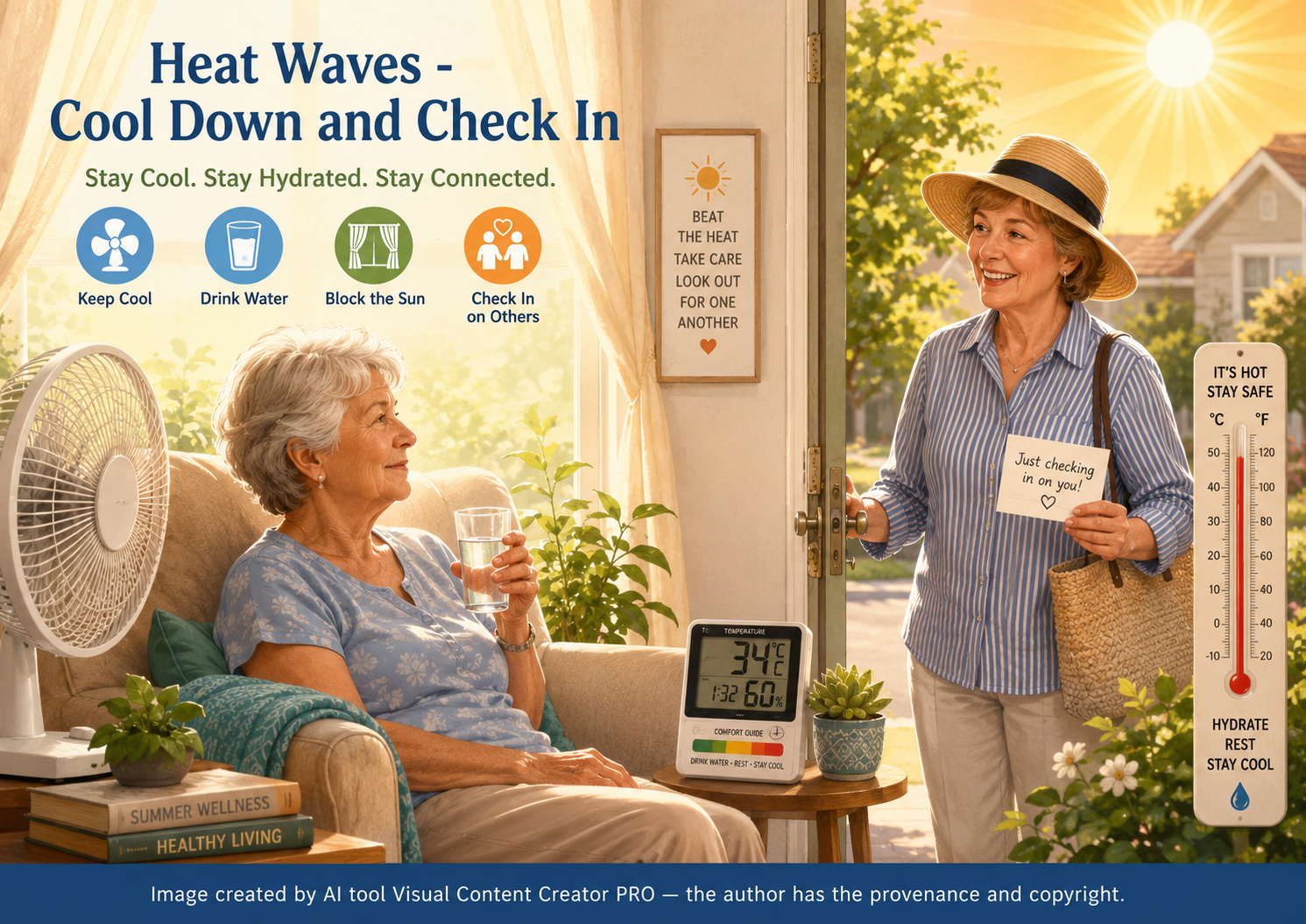
Cool Down and Check In
Heat Waves
What if the most caring thing we do this summer is ask one simple question: are you cool enough?
The question may sound small. It is not. Recent heat waves in France and Spain have shown again how quickly hot weather can become dangerous, especially for older people, people with chronic health concerns, and anyone living alone. North America has had its own painful lessons as well. Heat can move quietly through a home, build overnight, and affect judgment before anyone realizes trouble has started. Shifting the background or altering the text settings for a custom version can enhance the sense of comfort at home; at the same time, a visit to https://au.trustpilot.com/review/best-au-online-casino.org might be of interest to those seeking digital entertainment options during long afternoons indoors.
Many of us love the first warm days of summer. We open the windows, sit in the sun, tend the garden, visit the beach, and feel grateful to put winter behind us. Then the temperature climbs, the house stops cooling at night, the fan pushes warm air around, and the body has to work harder. For an older person, that work can take a toll.
Why heat hits harder in later life
Our bodies are always trying to keep a steady temperature. With age, that system may respond more slowly. Some older adults sweat less. Some feel thirst less clearly. Some live with heart, lung, kidney, diabetes, or cognitive conditions that make heat harder to manage. Some medications can affect hydration, sweating, blood pressure, or alertness. The result can be a faster slide from discomfort to dehydration, heat exhaustion, or heat stroke.
Indoor heat deserves special attention. Health Canada now recommends keeping indoor temperatures at or below 26°C, or 79°F, for older adults whenever possible. This is not simply about comfort. A home that stays hot through the day and night can increase strain on the body, especially when there is no air conditioning or no easy way to get to a cooler place.
Plan the cool before the heat
The usual summer advice still helps: slow down, wear a wide-brimmed hat, choose loose breathable clothing, avoid peak afternoon heat, use sunscreen, wear UV-protective sunglasses, and take shade breaks. Fans may help when the indoor air is warm, but they are less helpful when a room is very hot. A cool shower, damp cloths, closed curtains, and cooler rooms on the lower level can all help.
It also helps to make a plan before the worst heat arrives. Where is the closest cool place? A library, mall, community centre, cooling centre, shaded park, faith community, neighbour’s home, or family member’s house may all become part of a safety plan. For some people, transportation is the barrier. For others, pride is the barrier. A person may say, ‘I’m fine,’ when what they really mean is, ‘I don’t want to be a bother.’
Drink before thirst shouts
Dehydration happens when we lose more fluid than we take in. Warning signs may include dry mouth, dark or reduced urine, headache, dizziness, weakness, muscle cramps, nausea, or a faster heartbeat. Encourage small, regular sips of water throughout the day. Clear broths, popsicles, fruit with high water content, and electrolyte drinks may also help. Anyone on fluid restrictions or certain medications should follow medical advice.
Watch for the change in the person
Heat exhaustion may look like heavy sweating, weakness, dizziness, headache, nausea, vomiting, muscle cramps, rapid breathing, rapid heartbeat, extreme thirst, dark urine, or fainting. Move the person to a cooler place, loosen clothing, apply cool damp cloths, and offer small sips of water if the person is fully alert. Get medical help if symptoms continue, worsen, or do not feel right.
Heat stroke is an emergency. Call 911 if someone is confused, fainting, having seizures, losing consciousness, very hot to the touch, having chest pain, having trouble breathing, or no longer acting like themselves. While waiting for help, move the person to a cooler place, remove extra clothing, and cool the body with damp cloths, misting, fanning, or cool water. Do not give fluids to someone who is unconscious or not fully alert.
Make the check-in practical
During extreme heat, a friendly check-in can save a life. Call or visit older neighbours, clients, family members, and friends who live alone. Ask clear questions: Is your home cool enough? Have you had fluids today? Do you have a cooler place to go? Do you feel dizzy, weak, confused, or unwell?
Small clues can matter. A glass of water still full on the table. Curtains open to the afternoon sun. A home that feels heavy and hot when you walk in. A person who is usually sharp now seems slow, uncertain, confused, or unusually tired. These are gentle signals to pause, ask questions, cool the person down, and get help when needed.
Professionals who serve older clients can add heat safety to routine summer conversations. Ask about indoor temperature, ability to cool down their residence, transportation to cooler spaces, and whether someone will check in during a heat warning. Done respectfully, the question supports independence rather than taking it away.
A heat wave tests more than the thermometer. It tests whether we notice. The person behind the closed door, their access to resources, the client who says she is fine, or the neighbour who has no cool place to go. Looking out for one another begins with contact. Then it becomes care. In the heat, care can be as simple as asking, showing up, noticing, and staying until the person is safe.
Rhonda Latreille, MBA, CPCA
Founder & CEO
Age-Friendly Business®
p.s. Since 2003, Age-Friendly Business® has trained thousands of professionals and businesses committed to learning how to elevate the quality of the client, customer, and community experience. They are called Certified Professional Consultants on Aging (CPCAs)® and Age-Friendly Businesses®. They have earned the right to ask for your business.
Body – Create a Cool Zone
When extreme heat is expected, choose one room in the home to become the “cool zone.” Pick the coolest space, often a lower-level room or a room away from afternoon sun. Close curtains or blinds early in the day, reduce oven and dryer use, keep cool drinks nearby, and place a damp cloth, spray bottle, or small basin of cool water within reach. If the home does not cool down overnight, make a plan to spend part of the day somewhere cooler, such as a library, mall, community centre, cooling centre, or a friend’s home. The safest plan is the one made before the person feels weak, dizzy, confused, or too tired to act.
Spirit – Looking Out for One Another
“I don’t want to live in the kind of world where we don’t look out for each other. Not just the people that are close to us, but anybody who needs a helping hand.”
Charles de Lint
0 Comments